

Land comes first
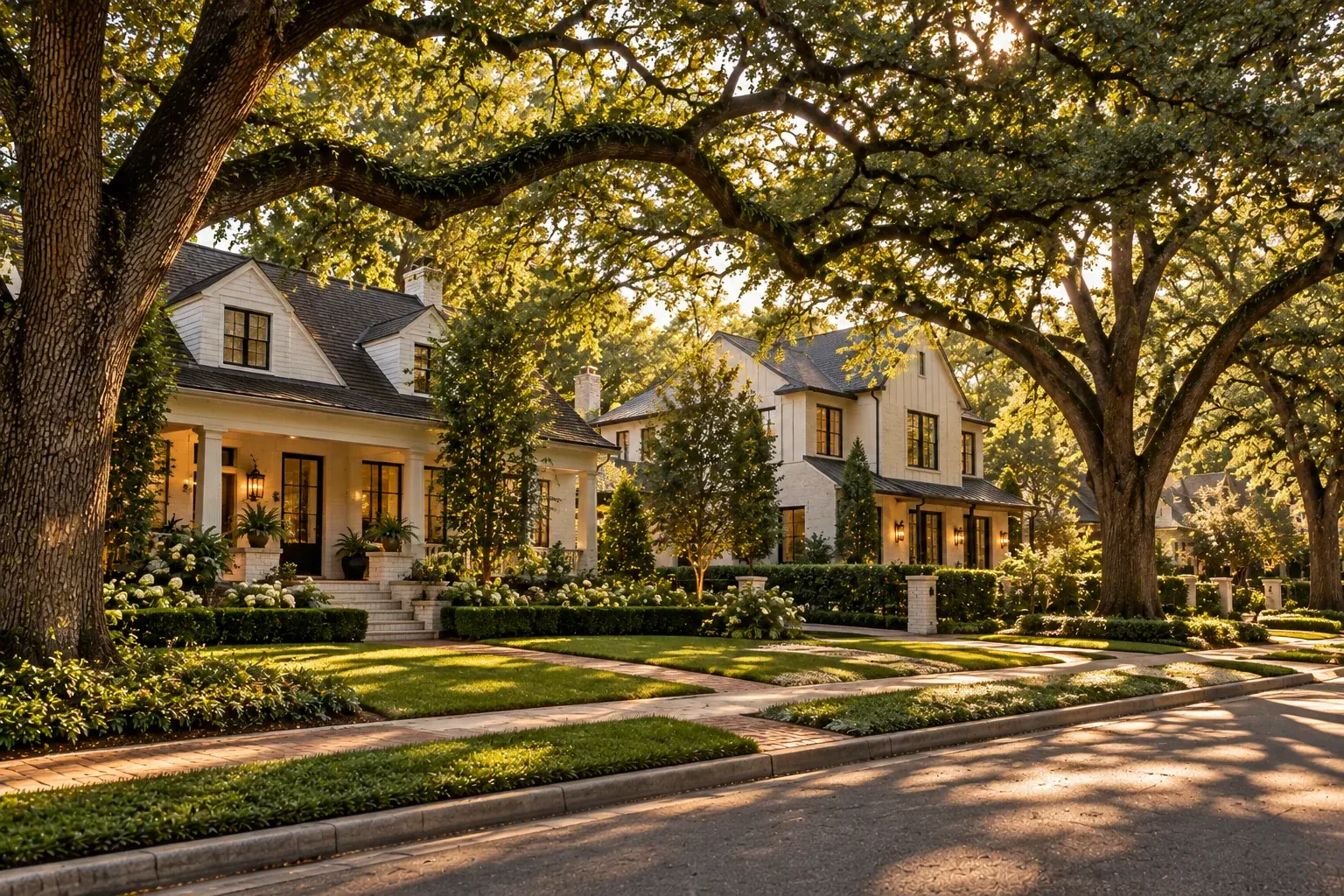
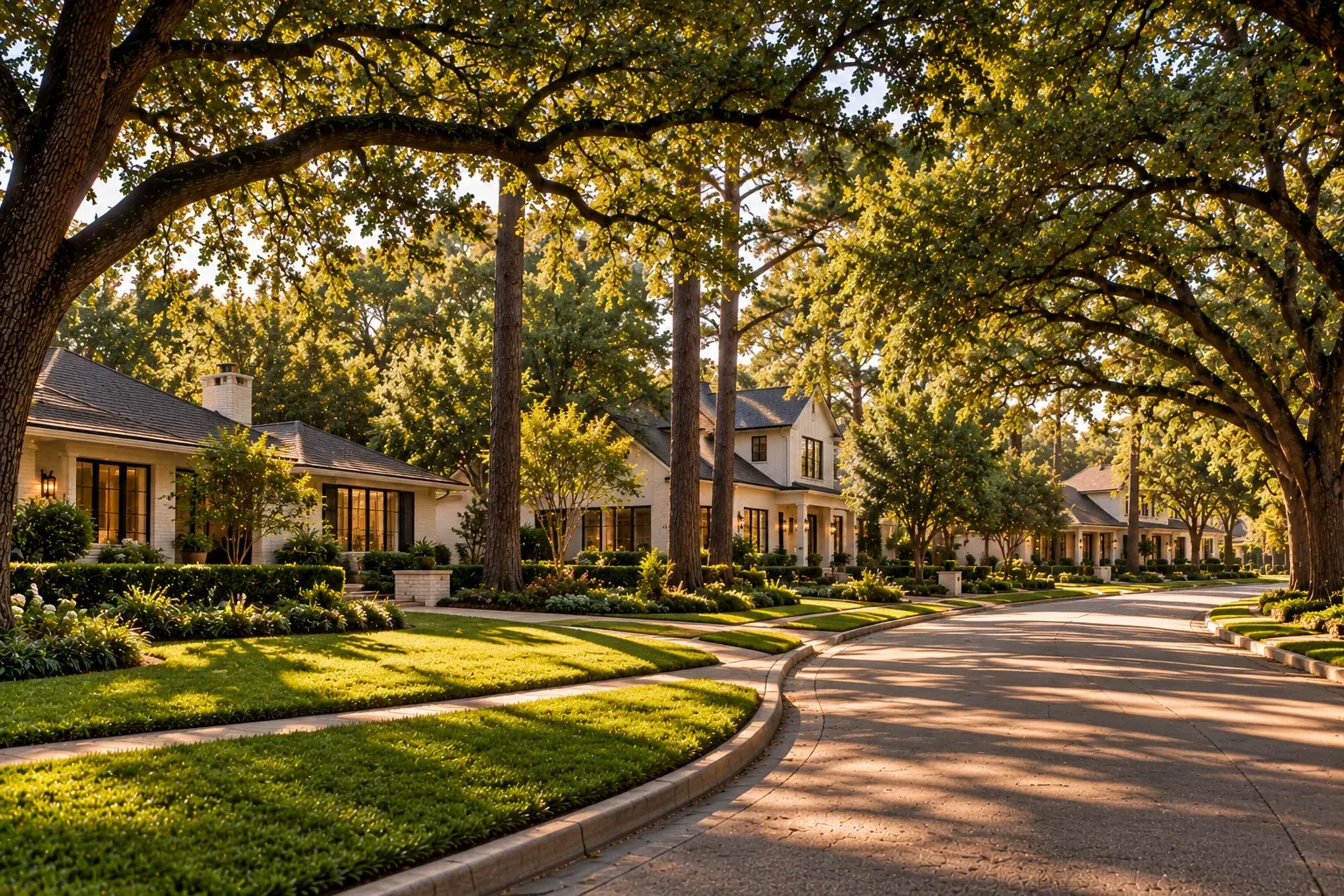
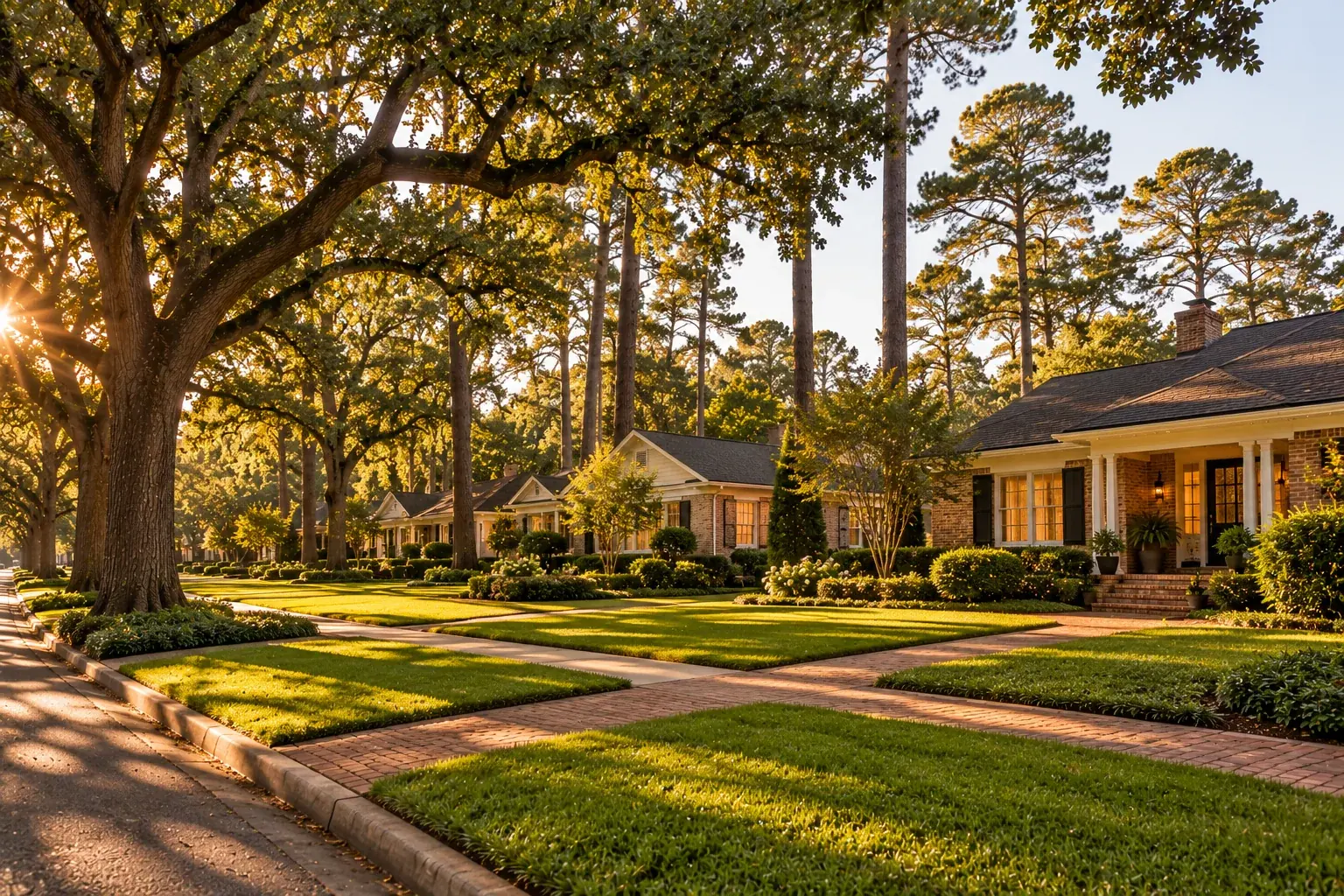
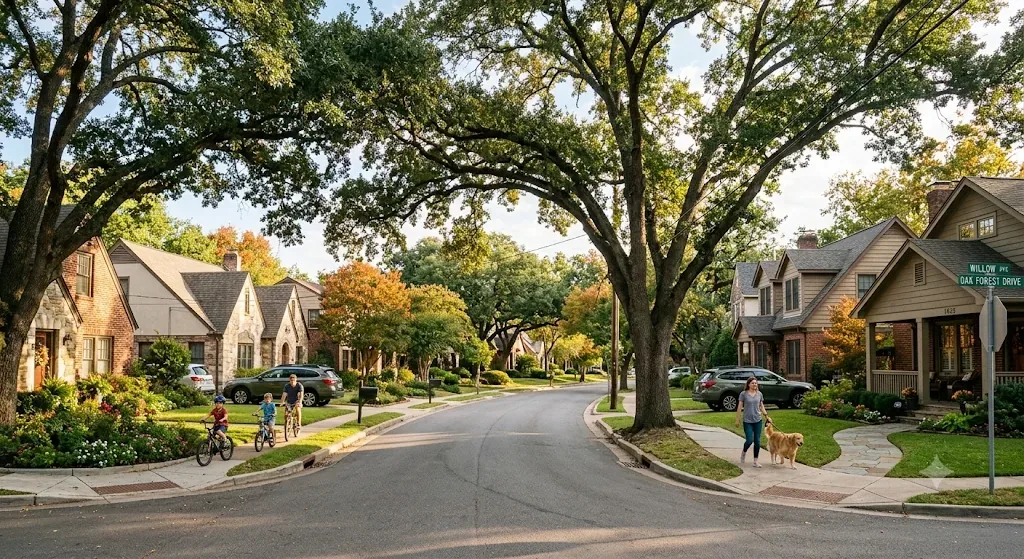
Original homes here are modest, mostly one-story cottages and ranches from the late 1930s through the 1950s. The supply of large close-in lots, on the other hand, is fixed. Builders look at what a finished new home on your street will sell for, subtract construction, carrying costs and profit, and what remains is what they can pay for the land. That residual land value sets a floor under every original home on a comparable lot.
Lot premium logic
- Size: Garden Oaks lots commonly run roughly 8,000 to 20,000 square feet or more; Oak Forest lots are more often 6,500 to 9,000.
- Frontage: a wider lot gives a builder or an addition more design flexibility, and usually adds more value than extra depth alone.
- Shape: regular rectangles build efficiently; pie-shaped or irregular lots can limit the footprint.
- Trees: mature oaks add beauty and value, but their placement can make or break a building footprint.
- Drainage and elevation: how water moves across the lot, and whether it sits in a mapped floodplain, affects both buyer appetite and construction cost.
- Restrictions: deed restrictions vary by section, and minimum lot size protections on many blocks prevent splitting. Both shape what a buyer can do.
- Location on the street: a quiet interior block usually beats a lot backing to a busy street or commercial use.
Original versus new construction, in ranges
These are typical ranges, not appraisals. They are useful for seeing where your home sits, and for understanding why price per square foot can mislead in both directions.
| Segment | Typical size | Typical price range | What drives it |
|---|---|---|---|
| Oak Forest original | Roughly 1,100 to 1,700 sq ft | Often roughly $450K to $650K | Lot, condition, updated systems and elementary zoning |
| Oak Forest new construction | Roughly 2,800 to 4,000 sq ft | Roughly $900K and up | Builder quality, elevation, layout and finishes |
| Garden Oaks original | Roughly 1,200 to 1,800 sq ft | From roughly $550K, rising with lot size | Land first, then condition and character |
| Garden Oaks new construction | Roughly 3,500 to 5,000 sq ft | Well above $1.5M | Lot, builder, design and outdoor living |
Price per square foot works reasonably well for comparing new homes to each other. For originals, it can mislead. A small cottage on a large lot can show a high price per foot because the land carries the value, while a large renovated home on a narrow lot can look like a bargain per foot and still be priced right. When I value an original, I start with comparable lots and then adjust for the house.
What buyers pay for
- Healthy mature trees that frame the house without threatening the foundation or roof
- A clean water history and visible drainage: gutters, grading and a slab that sits above the street
- A garage, or room for one, plus off-street parking
- A primary bedroom downstairs, valued by downsizers and by families planning to stay
- Updated systems with paperwork: replaced sewer line, modern electrical panel, a younger roof and HVAC
- Light and flow: open sight lines from the kitchen to the yard
- Zoning to an in-demand elementary, confirmed by address
Buyers discount just as predictably: unpermitted additions, foundation movement without an engineer's report, older roofs that complicate insurance, and busy-street locations all widen the gap between asking price and offers.
Where renovated originals fit
A renovated original sits between two worlds. It competes with new construction for buyers who want move-in ready, and with land for buyers who see the lot first. The renovations that hold their value are the ones buyers cannot easily see but always ask about: permitted electrical, replaced drain lines, a newer roof and documented foundation work. Kitchen and bath finishes matter too, but they date quickly. Buyers pay most for the work behind the walls.
How I build a valuation here
A good valuation in these neighborhoods is built by hand. This is the process I follow for every home, and the one you should expect from anyone pricing yours.
- Walk the home and the lot together, noting frontage, trees, drainage, the roof, the systems and anything a buyer's inspector is likely to find.
- Pull closed sales from the last three to six months in the same section, on comparable lots, and separate originals, renovated originals and new construction.
- Review active and pending listings, because those are the homes your buyers will compare yours to this month.
- Adjust for what the comps cannot see: lot width, elevation, a replaced sewer line, a garage, a downstairs primary bedroom.
- Estimate the land value floor from recent lot and teardown sales, so we know what a builder would likely pay.
- Prepare a package of comparable sales and documented improvements for the appraiser, so a lender's appraisal reflects the home you actually have.
The result is a range rather than a single number, along with a short list of what would move your home toward the top of it.
Timing your sale
With more inventory than a few years ago, timing matters less than preparation, but it still matters.
- Spring traditionally brings the most buyers, especially families planning around the school year.
- Late summer and fall bring fewer buyers and less competition; serious buyers are still active.
- Watch what is coming on your street. Launching next to two similar listings is harder than launching alone.
- Your next move matters as much as the calendar. A lease-back or bridge financing can let you sell at the right moment rather than the urgent one.
The 10-point self-assessment
Check each one that is true for your home
The more boxes you can check, the closer your home is likely to sit to the top of its range. The ones you cannot check are where a valuation conversation should start, because some cost little to fix and others are better priced in.
The rest of this guide is free.
Share your first name and email to unlock the full guide and the printable PDF.
UNLOCK THE GUIDE