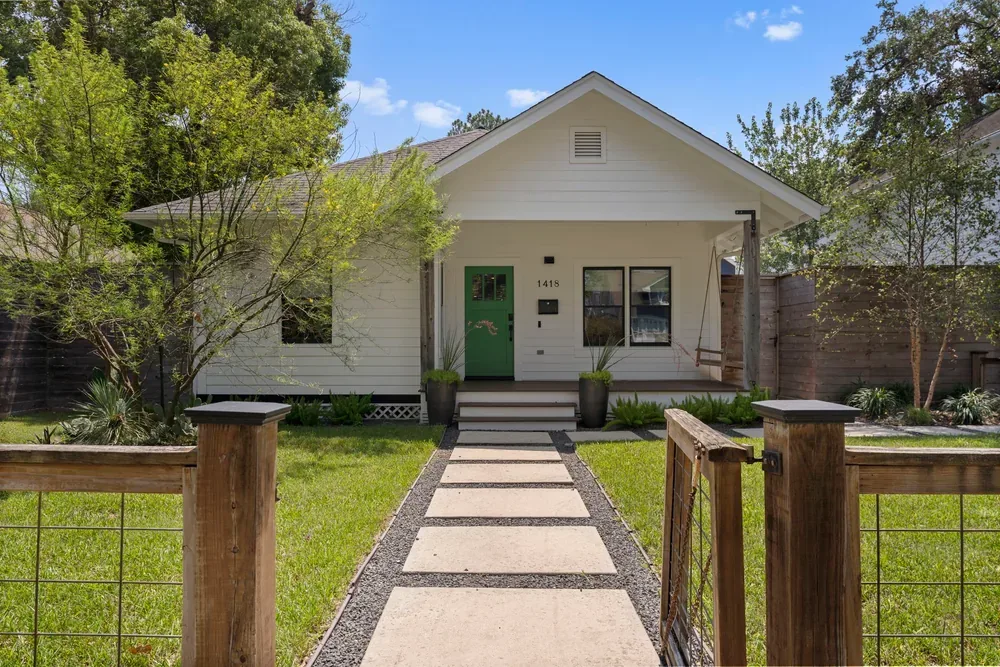



Where buyers stand in 2026
Houston has moved from a frantic seller's market to something much closer to balanced, and in some segments it leans toward buyers. The best house on a good street, priced correctly, can still draw competition. Most other homes now give you time to inspect, think and negotiate.
What that means in practice: sellers who have been on the market more than a few weeks are often open to closing-cost contributions or a rate buydown, repair negotiations are normal again, and you rarely need to waive protections to win a house. The buyers who benefit most are the ones who can move decisively when the right home appears.
Get underwritten, not just pre-approved
Sellers and listing agents read your approval letter as a risk score. The stronger it is, the more you can ask for on price and terms. There are three levels, and they are not equal.
- Pre-qualification: a lender's estimate based on what you told them. Useful for budgeting, weak in a negotiation.
- Pre-approval: the lender has pulled credit and reviewed some documents. This is the minimum to write an offer.
- Underwritten approval: an underwriter has reviewed your income, assets and credit before you choose a house, so only the property itself remains. This is the letter that lets you compete without overpaying.
Your buyer agreement, explained
Since August 2024, buyers sign a written representation agreement with their agent before touring homes. It spells out what your agent will do, for how long and how they are paid. Compensation is negotiable, and you can ask a seller to contribute toward your costs, including your agent's fee, as part of your offer. I walk through the agreement line by line before our first tour so there are no surprises later.
The option period is your most valuable tool
Under the standard Texas contract, you pay the seller an option fee for the unrestricted right to terminate within a set number of days. If you close, the fee is credited toward your purchase. If you walk away inside the window, you lose only the fee and get your earnest money back. It is the moment of highest leverage you will have in the entire transaction.
- Ask for enough days. In today's market, seven to ten days is reasonable for an older home that needs specialty inspections.
- Size the fee to the market. A few hundred dollars is common; a larger fee can strengthen an offer on a competitive house.
- Book inspectors before the contract is signed, so day one of the option period is inspection day, not scheduling day.
- Use the window for more than the inspection: insurance quotes, the survey, deed restrictions, HOA or civic club documents and flood history.
- Put every agreement in writing on the TREC amendment before the period ends. A verbal yes is not a repair agreement.
Inspections that matter on 1940s and 1950s homes
A general inspection is the starting point, not the finish line. Original homes in Garden Oaks, Oak Forest, Shepherd Park and Timbergrove share a few predictable weak points, and each one deserves a specialist when the general inspector flags it.
Cast iron and galvanized plumbing
Many homes from this era still have cast iron drain lines under the slab or crawlspace, and some have galvanized supply lines. Cast iron corrodes from the inside and can crack or belly over time. A sewer camera scope, usually a few hundred dollars, tells you whether the line has been replaced, repaired or is near the end of its life. Replacing drain lines under a slab can mean tunneling, which is why this finding often turns into a meaningful credit.
Foundation
Houston's expansive clay soil moves with wet and dry seasons. Many older cottages sit on pier and beam foundations, while many 1950s ranches are on slabs. Look for sloping floors, sticking doors, stair-step cracks in brick and gaps at window frames. If the inspector notes movement, bring in a structural engineer rather than a repair company, and ask the seller for any prior foundation work, warranties and whether they transfer.
Electrical
Watch for undersized original service, two-prong ungrounded outlets, cloth-insulated wiring and older panels from brands that some insurers decline to cover. An electrician's evaluation tells you whether you need a panel replacement, a full rewire or just targeted fixes. Ask about permits on any update; renovated originals vary widely in what was done behind the walls.
Roof age and insurability
Roof age now matters as much to your insurance company as to you. Some carriers surcharge or limit coverage on older roofs, and some settle older roofs at actual cash value rather than replacement cost. Get the roof's age from the seller, have the inspector estimate remaining life and get a real insurance quote during the option period, not after.
Trees and drainage
Mature oaks are a big part of why people buy here, and they deserve a look. Roots near a foundation or a sewer line, limbs over the roof and how water moves across the lot during a heavy rain are all part of the inspection, even if no report lists them as a single item.
New construction or renovated original?
In Oak Forest and Timbergrove especially, you will see both on the same block. Neither is automatically the better buy. Compare them on the factors that drive cost of ownership, not just finishes.
| Factor | New construction | Renovated original |
|---|---|---|
| Price | Higher total price, often more square footage per dollar | Lower entry price; land carries more of the value |
| Elevation | Often built higher to current floodplain rules | Original slab height; check history closely |
| Systems | New plumbing, electrical and HVAC | Depends on what the renovation actually replaced |
| Warranty | Builder warranty; read what it covers and for how long | Usually none beyond any transferable repairs |
| Disclosure | A never-occupied new home is generally exempt from the standard Seller's Disclosure; ask the builder directly | Full Seller's Disclosure, including flood history |
| Negotiation room | Builders often offer rate buydowns or closing credits | Room on price and repairs, especially after 30 days |
- For new construction: ask for addresses of the builder's homes that are three to five years old, review the drainage plan and survey, and hire your own inspector even on a brand-new house.
- For a renovated original: ask for permits and receipts, confirm whether the drain lines under the slab were replaced and check the electrical service size.
Negotiating repairs and concessions
After inspections, you have three levers: ask the seller to make repairs, ask for a credit toward your closing costs, or ask for a lower price. I usually prefer a credit or price adjustment for anything significant. You control the contractor and the quality, and the seller avoids managing work under a deadline. Back every request with a real bid from a licensed contractor; a number on letterhead ends a lot of arguments.
- Separate safety and system issues from routine maintenance and cosmetic items. Ask firmly for the first group and let most of the rest go.
- Know the lender limits on seller contributions. For conventional loans on a primary home, the cap is typically 3 percent of price with less than 10 percent down, 6 percent with 10 to 25 percent down and 9 percent with more than 25 percent down. FHA and VA loans have their own limits.
- Consider a rate buydown. One point, equal to 1 percent of the loan, often lowers the rate by roughly a quarter of a percentage point, though it varies by lender and by day. Over several years, that can be worth more than the same dollars off the price.
- Ask for the seller's flood policy declarations page, survey and any transferable warranties as part of the deal. They cost the seller nothing and save you time and money.
The negotiation starts before the first offer. By the time terms are on the table, most of the outcome has already been decided by who prepared.
Flood and insurance due diligence
Flood risk in this part of Houston is address-specific. Two homes a block apart can have very different histories, and the FEMA maps for Harris County are being updated. Check the current and preliminary flood zones, read the flood section of the Seller's Disclosure carefully, ask for an elevation certificate and get both homeowners and flood insurance quotes during the option period. My Houston Flood & Insurance Checklist covers every step in detail.
Closing costs: the real number
On top of your down payment, plan roughly 2 to 4 percent of the purchase price for closing costs and prepaid items. The range is wide because it depends on your loan, your rate choices and the time of year you close.
- Lender charges: origination and underwriting fees, appraisal and any points you choose to buy.
- Title and escrow: the lender's title policy, escrow fees and recording. In the Houston area, sellers customarily pay for the owner's title policy, but it is negotiable.
- Survey: a new survey if the seller's existing one cannot be reused with a T-47 affidavit.
- Prepaids: your first year of homeowners insurance, any flood policy and initial deposits into your escrow account for taxes and insurance.
- Tax prorations: Texas property taxes are paid in arrears, so the seller usually credits you for their share of the current year at closing. It helps, but you will pay the full bill when it comes due.
Your 12-step timeline
- Strategy conversation: budget, neighborhoods, must-haves and your timeline. Sign your buyer agreement.
- Underwritten approval from a local lender, with a payment you are comfortable with at today's rate.
- Insurance pre-check: talk to an agent about roof age, construction type and flood zones before you fall in love with a house.
- Tour and shortlist. Use the checklist below and revisit your top homes at a different time of day.
- Address-level research: flood history, deed restrictions, historic district status, school zoning and recent comparable sales.
- Write the offer: price, option days and fee, earnest money, financing terms, appraisal terms and closing date.
- Option period, days 1 to 3: general inspection, sewer scope and any specialists.
- Option period, final days: bids, insurance quotes and a written amendment for repairs or credits.
- Appraisal and loan processing, usually in the two to three weeks after the option period.
- Title commitment and survey review. Read the exceptions and easements.
- Clear to close: final loan approval, Closing Disclosure at least three business days before closing and wire instructions verified by phone.
- Final walkthrough, signing and funding. Most financed purchases close roughly 30 to 45 days after the contract is signed.
The tour checklist
Bring this to every showing
If you would like a second set of eyes on a specific house, or a straight answer about what it is worth, call or text me. I would much rather help you walk away from the wrong house than watch you overpay for it.
The rest of this guide is free.
Share your first name and email to unlock the full guide and the printable PDF.
UNLOCK THE GUIDE