

IN SHORT
How does contract negotiation experience help when buying or selling a home?
Most home negotiations are won in preparation. Nicole spent more than ten years negotiating Fortune 500 contracts, and the same rules apply: know your best alternative and estimate the other side's, price repair requests with real bids, consider credits instead of seller-performed work, and set your appraisal gap strategy before any offer is written.
- Preparation, not personality, wins most negotiations
- Know your best alternative and estimate the other side's before making a move
- Price repair requests with real bids and consider credits instead of seller-performed work
- Decide your appraisal gap strategy before you write or accept an offer
Before I was licensed in 2016, I spent more than ten years as a buyer and contract negotiator for a Fortune 500 oil and gas company. I negotiated with suppliers who were very good at their jobs, on contracts where small terms carried large consequences. When I moved into real estate, I expected the work to feel different. It did not. The stakes are more personal and the paperwork is shorter, but the principles that decide outcomes are the same.
Preparation beats personality
People imagine negotiation as a contest of nerves, with a tough talker across the table. In practice, the side that wins is usually the side that did more homework. In procurement, I never walked into a negotiation without knowing the market price, the supplier's costs, their alternatives and mine. In real estate, the equivalent is knowing the true comparable sales, the condition of the home, the seller's or buyer's timeline and what the other side is likely to do if this deal does not happen.
That is why my listing process starts weeks before a home goes live. By the time an offer arrives, I want to already know which repairs a buyer is likely to request, how an appraiser will view the comps and what the seller would accept on terms if price is fixed. The negotiation starts before the first offer.
Know your alternative
Negotiation training has a term for this: your BATNA, the best alternative to a negotiated agreement. It is the most important number in any deal, and most people never write it down. For a seller, the alternative might be waiting another month for a different buyer, leasing the home or accepting a backup offer. For a buyer, it might be the second-choice house, or simply continuing to rent.
When you know your alternative clearly, you stop negotiating out of fear. You can say no to a bad term calmly, and you can say yes to a good one without second-guessing. When you understand the other side's alternative, you know how hard you can push. A seller with a home that has been on the market for sixty days and a new job starting in another city has a weaker alternative than one who just listed and is in no hurry.
Leverage is information
Leverage is not volume or aggression. It is information the other side does not have, or time they do not have. In a market with more inventory, like the one Houston has today, buyers have more alternatives and therefore more leverage. That changes my advice to sellers: we win by removing reasons for buyers to negotiate, not by refusing to negotiate. A pre-inspected, well-documented home priced to the real comps gives a buyer fewer levers to pull.
The option period is where deals are really made
In Texas, the standard TREC contract lets a buyer pay an option fee for the unrestricted right to terminate within a set number of days. Most buyers use that window to inspect, and most repair negotiations happen there. For sellers, this is the moment of highest risk, because the buyer can walk away for any reason. For buyers, it is the moment of highest leverage.
I treat the option period the way I treated a supplier's final quote: as a negotiation with a deadline, where both sides know their alternatives. As a seller's agent, I try to anticipate the inspection by getting ahead of it. As a buyer's agent, I schedule inspectors before the contract is signed, so we use every day of the window to gather information rather than wait for it.
Repair negotiations: price the problem, not the emotion
Inspection reports are long, and they always find something. The mistake is treating every item as equal or reacting emotionally to a dramatic photo. I separate findings into three groups: safety and system issues that any reasonable buyer would require, maintenance items that come with any house and cosmetic items that are a matter of taste.
- For real issues, get an actual bid from a licensed contractor rather than guessing. A number on letterhead ends a lot of arguments.
- Consider a closing cost credit or price reduction instead of seller-performed repairs. Buyers usually prefer to control the work, and sellers avoid managing contractors under a deadline. Lender limits on seller contributions apply.
- Do not chase small items. Asking for everything signals that you will be difficult to close with, and it can sour a deal that was otherwise strong.
- Use the TREC amendment form to put every agreement in writing before the option period ends.
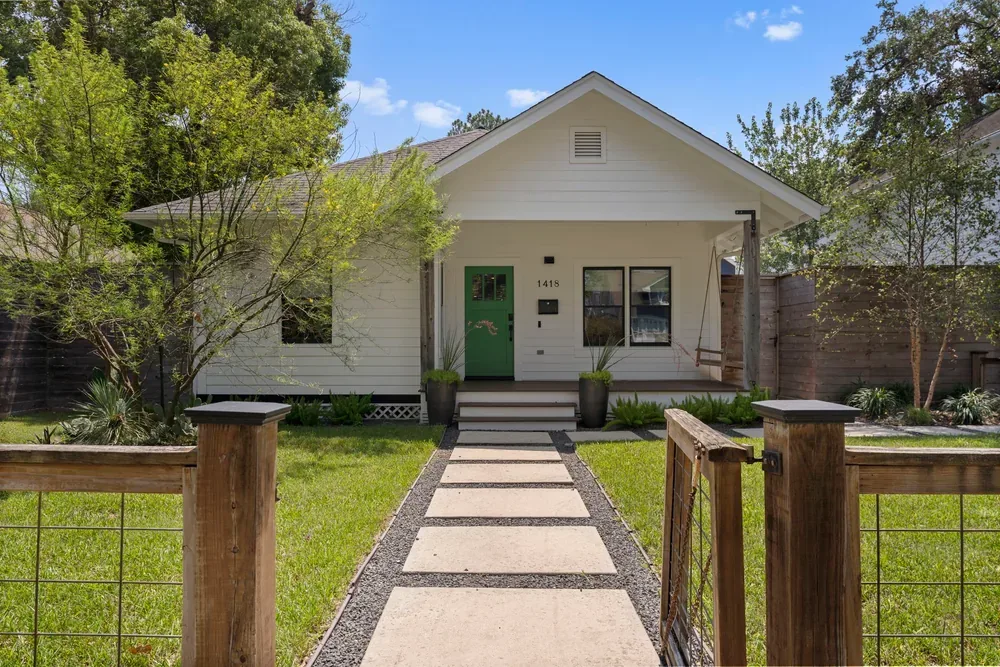
When I sold 1418 Ashland Street in the Heights, we documented the improvements in advance and explained the historic district guidelines to buyers before they toured. The repair negotiation was short, because there were few surprises left to negotiate.
Appraisal gaps
When a buyer is financing, the lender orders an appraisal. If it comes in below the contract price, someone has to absorb the gap: the buyer brings more cash, the seller reduces the price or the two split the difference. The Texas Third Party Financing Addendum lets a buyer waive, fully or partially, the right to terminate over a low appraisal, which became common in the bidding wars of 2021 and 2022 and is less common now.
The best defense, on either side, is preparation. Sellers should price to comparables an appraiser will actually use. When a home has features that comps do not capture well, like an oversized lot or a recent renovation, I provide the appraiser with a clear package of comparable sales and improvements. Buyers should decide before writing the offer how much of a gap, if any, they are prepared to cover.
Relationships outlast transactions
In procurement, I learned that you will see the same suppliers again, so how you win matters. Real estate is the same. The agent on the other side of today's deal may represent the buyer for your next listing. I have represented the same home more than once, including 5710 White Birch Run in Benders Landing, and I have leased and later sold for the same owners. Being firm, prepared and fair is not just good manners. It is a strategy that compounds.
The negotiation starts before the first offer. By the time terms are on the table, most of the outcome has already been decided by who prepared.